
Emotional Intelligence & Adaptive Leadership Intensive
This one day summit is a condensed, high-impact introduction to Thrive Forward’s 6 week leadership curriculum. Participants will leave with actionable strategies for adaptive leadership, emotional intelligence, and values-aligned decision making. Led by MIT and industry leaders, partcipants will engage in systems thinking and changemaking, learn about adaptative leadership, restorative practices and more. The skills and tools you learn at Thrive Forward can be applied in organizational leadership roles on campus and in your career beyond MIT.
Learning Goals
By the end of the intensive, participants will:
- Explore the adaptive leadership framework for managing complex challenges.
- Strengthen emotional intelligence (EI) for self-awareness, empathy, and resilience.
- Reflect on personal values and purpose in leadership.
- Engage in restorative dialogue and peer mentorship exercises.
- Connect with MIT leadership and alumni to understand what employers seek in future leaders.
Tuesday, March 10, 2026
Location: Schwarzman College of Computing, Building 45, 8th Floor
Agenda
8:30 AM – 9:00 AM: Registration and Breakfast
9:00 AM – 9:15 AM: Introduction
Suraiya Baluch, Ph.D., Associate Dean & Director, GradThriving, Office of Graduate Education
Denzil Streete, Ph.D., Senior Associate Dean and Director, Office of Graduate Education
9:15 AM – 11:15 AM: Search Inside Yourself: Emotional Intelligence for Graduate Leadership
Lisa Freed, M.D., Ph.D.
Tracie Jones Barrett, Ed.D., Advisor, Leadership Development, MIT Office of the Provost
This interactive Search Inside Yourself (SIY) workshop introduces graduate students to practical emotional intelligence tools to strengthen focus, resilience, and leadership presence in high-pressure academic and professional environments.
Grounded in mindfulness, and neuroscience research, the session supports students in managing stress, improving self-awareness, and engaging more effectively with others. Through brief experiential practices and guided reflection, participants will explore how emotional intelligence enhances collaboration, communication, and purposeful leadership.
11:15 AM – 11:30 AM: Break
11:30 AM – 12:30 PM: Self & System: A Two Part Talk, Part 1: Self
Joe Pinto, MDiv, Change Leadership Coach, LLI
To face the institutions we have built and attempt meaningful change within them requires alternating attention to ourselves and to the system; a kind of zooming in and zooming out that gives hope to the new by finding where individual capacities can move organizational habits.
Part I: Self
Systems are made up of people whose values, beliefs, needs, and interests undergird organizational health and efficacy. Failure to heed individual voices risks mission drift or atrophy, and can turn small conflicts into large crises. Those who self-select to lead change in systems must therefore understand the forces behind individual hopes, fears, and behaviors, including and especially their own. Rooted in the concept of Immunity to Change (Robert Kegan), this session will go deep into foundations of empathy and curiosity between stakeholders.
12:30 PM – 1:00 PM: Lunch
1:00 PM – 2:15 PM: Self & System: A Two Part Talk, Part 2: System
Joe Pinto, MDiv, Change Leadership Coach, LLI
At the same time, a system that is made up of people begins to take on a life of its own, and can operate in ways that no individual person or faction is directly responsible for or has specifically intended. Furthermore, in something of an invisible feedback loop, the culture that emerges in a system then circles around to instruct and reify individual behaviors, often locking people into modalities that feel choiceless. Disrupting these trends is strategic, and requires change leaders to dance with the larger forces at play. Rooted in the concept of Adaptive Leadership (Ronald Heifetz), this session will make organizational ticks and patterns recognizable, and open them to fresh possibility.
2:15 PM – 2:30 PM: Break
2:30 PM – 3:45 PM: Restorative Leadership 101: Tools for Building a Culture of Care and Accountability
Nina Harris, Manager of Adaptable Resolution & Restorative Practices, Institute Discrimination & Harrassment Response Office
Building and leading a healthy community means creating spaces where we can strengthen our values through both connection and conflict. How can we create communities of care that encourage an open exchange of diverse ideas in ways that simulate our sense of belonging rather than create polarization and division? How can we actively and intentionally address the harm (accidental or intentional) in ways that cultivate a culture of individual and collective accountability?
In this session, we will identify how restorative justice principles can offer us a framework for developing strong communities, as well as, exploring core restorative practices and tools that can help shape you into a competent, compassionate, and transformative leader.
3:45 PM – 4:00 PM: Break
4:00 PM – 5:00 PM: Living Rent Free: The Invisible Rules Behind Your Decisions
Bryan Thomas, PhD, Chief Community and Belonging Officer, Harvard T.H. Chan School of Public Health
Every decision you make begins with a filter. To move quickly in complex environments, your brain simplifies, highlighting what feels salient. Over time, what captures our attention begins to shape how we interpret people and situations. Because what feels clear often feels complete. In high-pressure environments, those interpretations influence who we trust and how we lead. As leaders, stronger decision making is not about removing these filters, but about becoming more receptive to what we may have overlooked. This session explores why this happens and offers practical ways to broaden perspective, disagree better, and make clearer, more deliberate decisions.
5:00 PM – Closing
Contact
Questions regarding the symposium? Email graddiversity@mit.edu.
Speakers
Lisa E. Freed, S.B, S.M., M.D., Ph.D.

MIT Retiree and former Principal Research Scientist, HST/IMES
Dr. Lisa Freed was educated at MIT (life sciences, nutritional biochemistry & metabolism, and applied biological sciences) and Harvard (medicine). She conducted basic & clinical research in tissue engineering and regenerative / rehabilitation medicine for over three decades, co-authored >125 publications, taught at MIT and Harvard, including functional human anatomy, and held a co-appointment at Draper. She is a Fulbright fellowship recipient, a fellow of the American Institute for Medical & Biological Engineering, and a passionate contributor to Search Inside Yourself at the Institute after having retired on July 4, 2023. Email: LFreed@mit.edu | ORCID.lef
Nina N. Harris
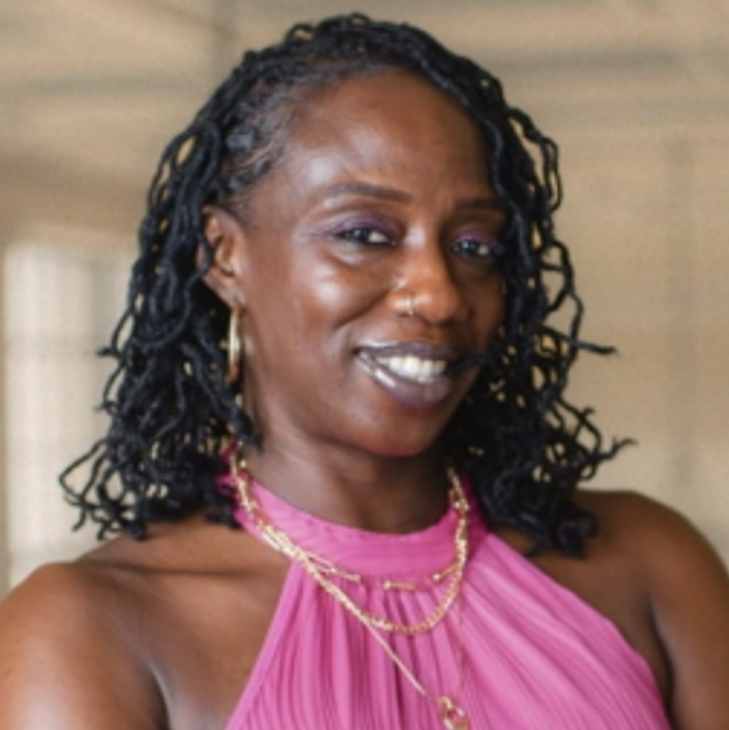
Nina Harris serves as the campus expert and lead on restorative practices and conflict transformation. In her role as the Manager of Adaptable Resolution and Restorative Practices in IDHR, she works to provide community members with access to holistic pathways to respond to and repair identity-based and interpersonal harm. Working across the Institute, Nina helps campus leaders build skills and capacity to respond effectively and compassionately to the issues that challenge our sense of belonging, safety and wellbeing. Email: nnharris@mit.edu
Tracie Jones Barrett, Ed.D.
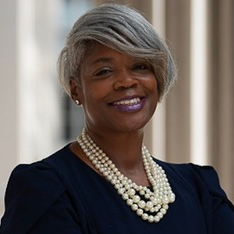
Dr. Tracie Jones Barrett leads leadership development initiatives at MIT focused on adaptive leadership, emotional intelligence, and values-aligned decision making. She previously served as Interim Deputy Institute Community and Equity Officer and Assistant Dean for DEI at SHASS, supporting departments in advancing belonging and achievement across the Institute. She also teaches graduate courses on leading with equity and empathy at Emerson College and is committed to equipping emerging leaders with tools to navigate complexity and drive meaningful change.
Joe Pinto, MDiv

Joe Pinto is the Creative Director of the Empowerment & Impact Fellowship at the Harvard Graduate School of Education and a Senior Leadership Coach for Leadership Lab International. He is also the head curriculum designer for and co-facilitator of the Massachusetts Department of Elementary & Secondary Education’s Leading with Perseverance professional development series, which has trained nearly 30 Massachusetts school superintendents and their teams in leading through difficult times, orchestrating productive conflict, and working across differences. He coaches school and school district leaders across the Northeast. Previously he worked for many years in school model redesign in New York City. He has extensive experience starting up and building capacity for successful schools and youth-serving organizations. Additionally he is an expert in forming cross-sector partnerships and diagnosing complex organizational challenges.
Bryan Thomas, PhD
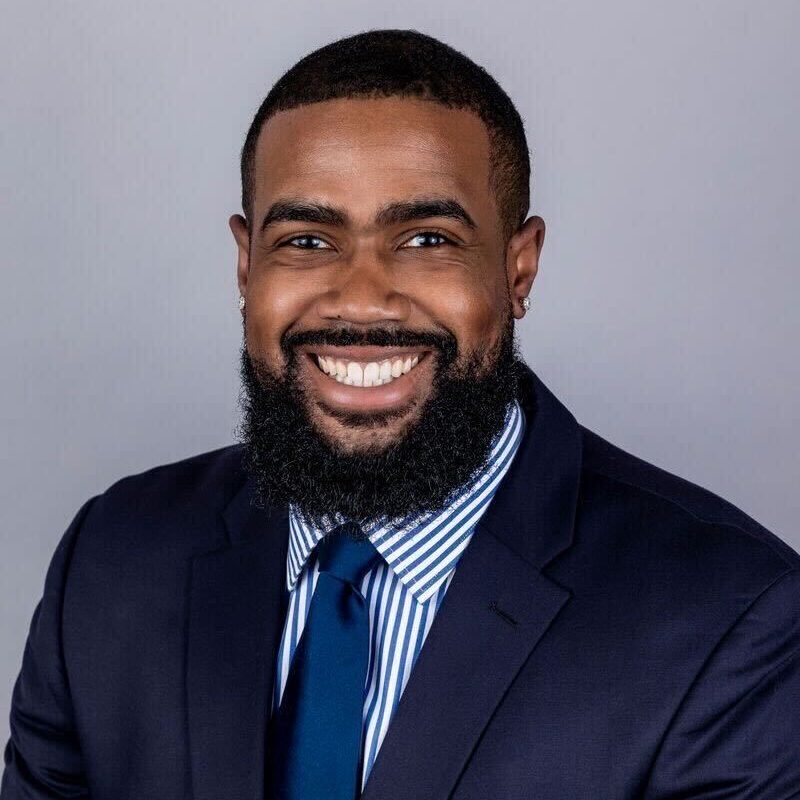
Bryan Thomas, Jr. serves as the Chief Community and Belonging Officer at the Harvard T.H. Chan School of Public Health, where he leads efforts to strengthen institutional commitment to pluralism and foster meaningful engagement across differences. His work focuses on enhancing organizational processes that support healthy community, climate, and culture. Previously, Bryan helped establish the diversity, equity, and inclusion office at MIT’s Sloan School of Management and contributed to building a culture of inclusive excellence. He also served as associate director of the EDGE Fellowship at Stanford University. He holds a bachelor’s degree in communications from the University of Illinois Urbana-Champaign, a master’s in higher education from Florida International University, and a doctorate in education and human resource studies from Colorado State University.
