

Finding light in the long New England winter
On an early spring day, with rare 60F air and blue skies, there’s barely room to walk along the banks of the Charles across from MIT’s main campus. Like the native spotted salamanders, emerging from their winter burrows to mate and lay eggs in vernal pools, graduate students and young professionals clog the packed limestone paths bordering the river, adorned in athletic shorts and Hoka running shoes that haven’t seen light for the last 4 months.
Whenever such a day arrives, it feels like we all collectively breathe a sigh of relief, as well as an extra hour out at lunch. However, such days are a tease in New England; 24 hours later, we’re back to being bundled up with a lovely wintry mix of sleet and snow coming down. Spring takes its time here, peeking out for a few moments at a time, only to disappear and leave us feeling cheated and wondering: could the seasons finally make up their mind?
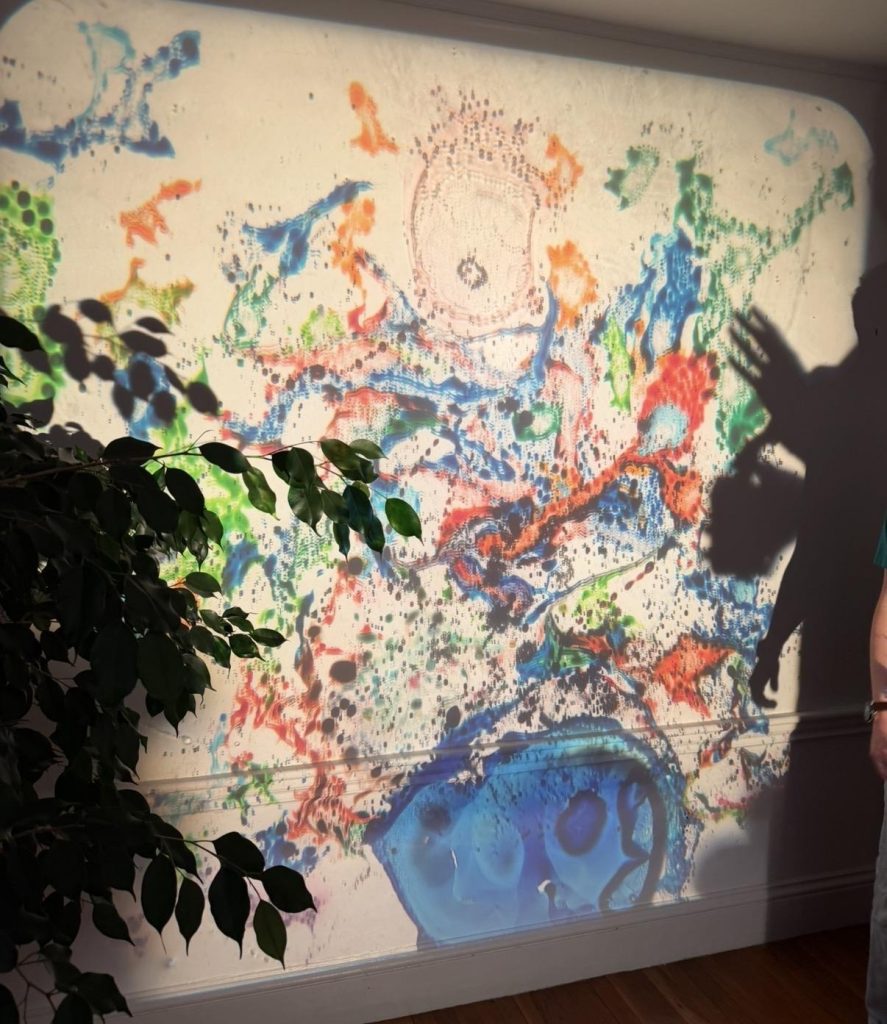
This year’s winter was particularly cold and snowy; arctic air in January locked us in a cold freeze for a month, and the two blizzards that hit Boston blanketed us in so much snow that the sidewalks turned into trenches. Which brings me to the main focus of this article: how to make it through months of winter when snow and a -10F wind chill greets you in the morning and the sun has already set before you’ve left MIT. This winter I found a hobby that helped bring real, much needed light into the dark days.
One day, while watching music videos on YouTube, I started listening to an album by the group Khruangbin, a band who’s gained popularity in the last few years for their unique blend of psychedelic rock and funk. In the music video there are images of kaleidoscopic shapes, changing colors, and streaming bubbles that are projected on the backdrop and which cover the performers themselves. The visuals complement the music, enhancing the warm, groovy feel of the sound, and for a few minutes I forgot about the cold and snow and was reminded of summer music festivals, cold drinks in the shade in late July, listening to Boston Calling from the bank of the Charles. And in that moment, an idea began to germinate, a desire to bring people together to enjoy this sound and light.
I began to wonder how the colorful effects in the music video were produced. After checking out the YouTube channel of the person credited for the visuals, I was surprised to discover that all the effects were analog. Old school overhead projectors, like those from elementary school, were the main source of light. No LCD projectors were used at all, no coding of visuals, just different combinations of colored filters, physical motors, water, and oil.
My interest led me down a classic YouTube rabbit-hole, a joy in and of itself, and a seemingly rare occurrence in a time where highly curated algorithms pull our attention away from what we are initially seeking. (How many times have I opened YouTube with some idea and quickly forgotten it because of recommended clickbait?) Yearning for the simpler days of YouTube aside, I found a small corner of the internet where people making visuals with analog overhead projectors shared their techniques and effects. Watching a few videos, I discovered all kinds of physical techniques used to create these magical effects. A simple acrylic wheel with different color transparency paper turning on a motor creates a myriad of colors which can capture the feel of a sunset; an aquarium pump attached to a dish produces a stream of bubbles. Simple tools and effects, amplified by the projector, can produce a mesmerizing collage of organic shapes, colors, and textures.
I decided I needed to get my hands on an overhead projector to start playing around with this medium myself. It turned out more difficult to acquire one than I expected. It took several weeks of scouring Facebook Marketplace before finally finding a seller nearby.
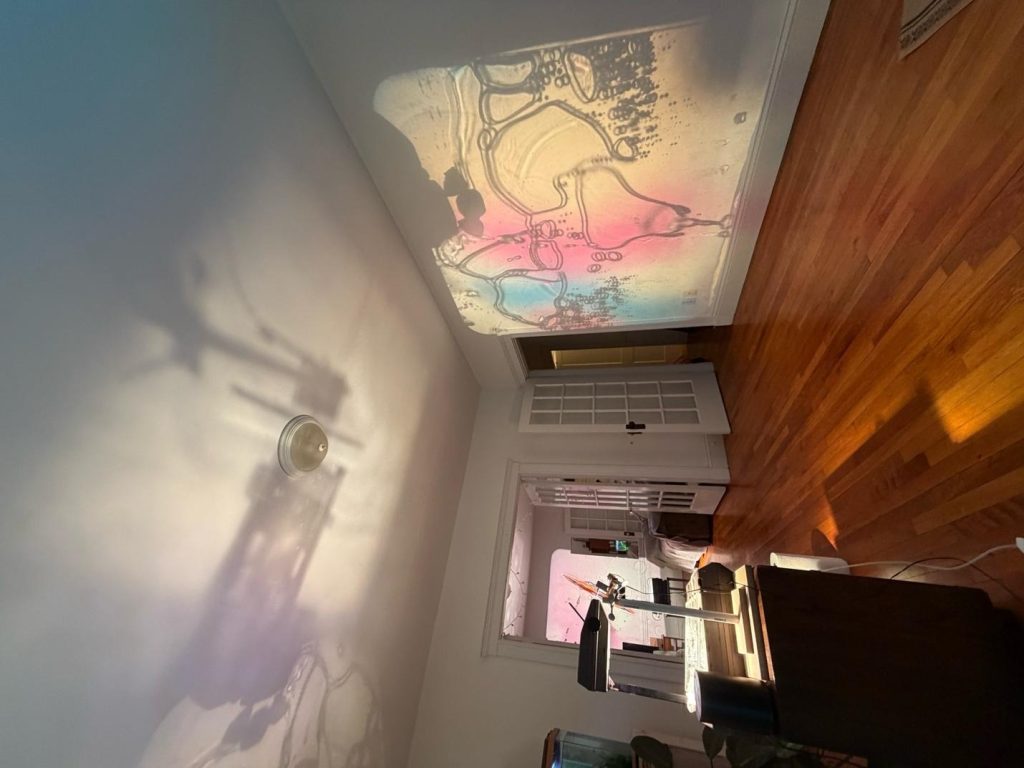
I then spent weeks trying out different effects, using a variety of oils, water, isopropyl alcohol, and mixtures of cough medicine in various combinations.
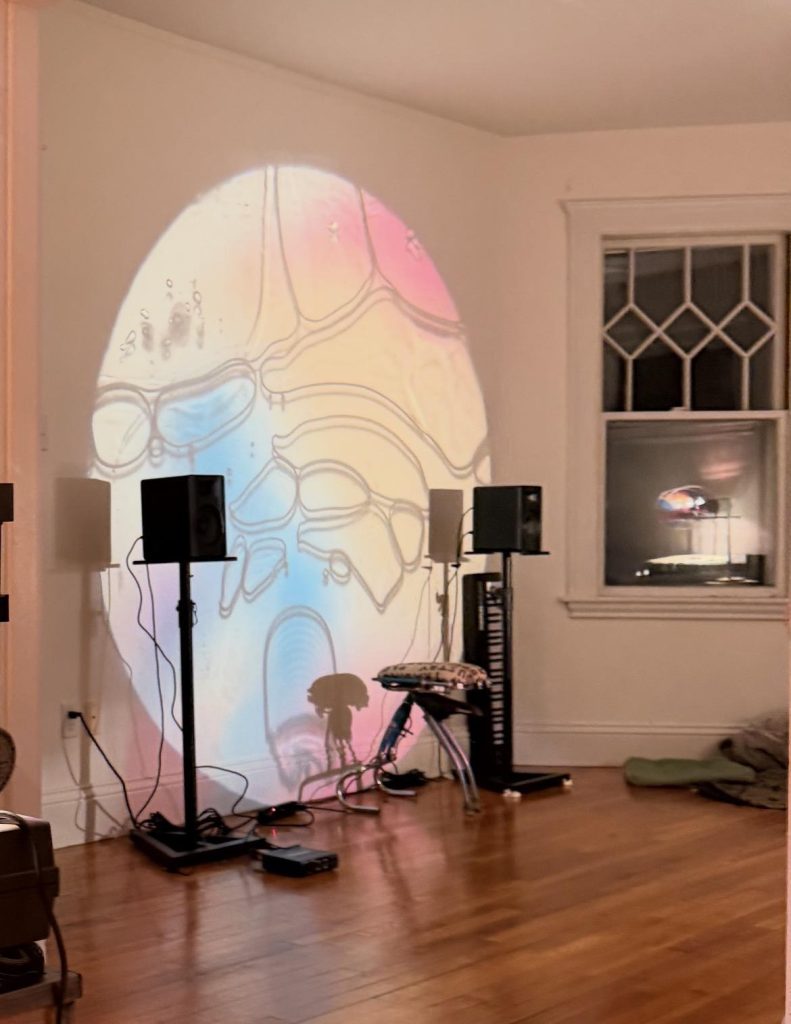
One day, while at an open mic at the Lilypad at Inman square I saw a jazz duo perform and was reminded of the Khruangbin video, only the visuals were missing. I met them after their performance, and we exchanged contacts. With spring peeking out, I could see the pieces of the winter coming together––the experimentation with the light, meeting musicians at the Lilypad––an idea was beginning to sprout. And so, in late March, with the last bits of snow melting and the buds of tulips poking out of the dirt, we cleared off the walls of our living room, filling it with projections emulating the blooming of flowers, the splashes in spring puddles, and invited 30+ friends to dance and welcome the new season.
Winter may be dark and long in Boston, but sometimes beautiful ideas take root and when spring comes, they’re ready to take in the sunlight and blossom.
Share this post:
