

To survive the winter, embrace the winter
My experience with the MIT Outing Club
I am from a hot and humid part of India. When I got into MIT, I was elated, but then the reality of the decision hit me. Could I survive the Boston winters?
My first winter was brutal. I had prepared for the cold by investing in a good coat and warm boots, but nothing had prepared me for the shorter days – for the sun setting at 5 pm and walking home from lab in the dark. I still had hours left in my day, but my body didn’t believe it. I’d get back to my room and feel the evening collapse around me, with no motivation to socialize or go to the gym. Over IAP, I felt a constant gloominess despite being in one of the most exciting times of my life.
When I asked friends what they did in winter, the consensus seemed to be a state of partial hibernation: mostly stay home and wait it out. I didn’t love that answer, but I didn’t have a better one.
All that changed when I joined MITOC, the MIT Outing Club. They offer winter safety lectures in which we learned how to safely hike in winter: what layers to wear, what food won’t freeze solid at -20°C, and what traction to use while navigating the winter terrain. I figured it was worth a shot (partly because I had already paid the membership fee) and signed up to hike Welch-Dickey in the White Mountains.
As I rented gear for the hike, I felt intimidated and almost backed out. But after hearing overwhelmingly positive reviews about MITOC trips from everyone I talked to, I decided to go. We left Boston before 6 am to catch as many daylight hours for the hike as possible, stumbling into the rideshare in the dark in our sleep-deprived state.
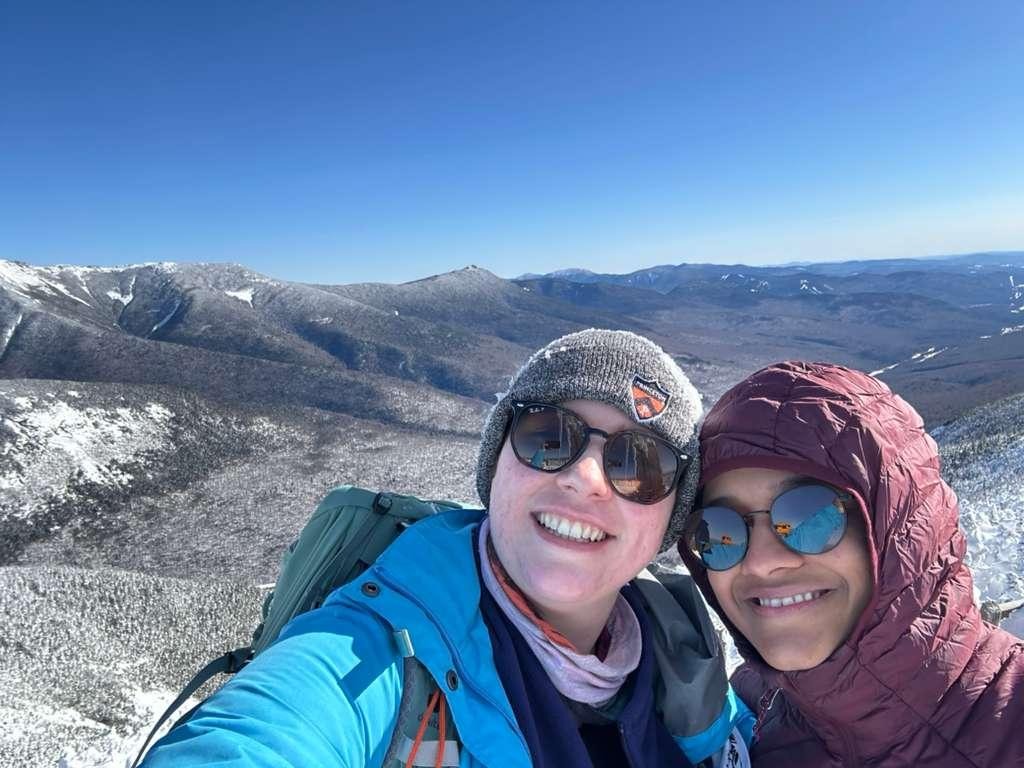
And the reviews were absolutely right. I was hooked and proceeded to sign up for a hike every weekend of IAP.
I learned how to use specialized footwear for snowy versus icy conditions. I walked across a frozen lake and then again the following weekend while it snowed. I learned that snow can have different textures, from powdery snow that’s lovely to ski on to wet sticky snow that’s perfect for making a snowman. I heard so many different sounds snow and ice can make: the crunch of snowshoes on packed snow, the delicate clink of icicles at the tips of pine needles when you brush past them, the smack of snow falling in globs from tree branches to the ground. I caught many perfect snowflakes on my glove. I learned to tell fir (friendly) from spruce (spiky). And there was so much more I still wanted to try – cross-country skiing, ice climbing, and skating on natural ice – but the winter was too short.
MITOC is open to non-MIT folks too, so many of the people I met were from all over the Boston area, with lives that had nothing to do with grad school. I met inspiring people who had completed all 48 New Hampshire 4000-footers, and beginners like me who were just there to have a good time. Those trailside and car conversations turned into real friendships. I now have a dinner and dance group of MITOC friends and a playlist of songs I picked up on trips. It helped me build a life outside of campus in a way I hadn’t expected.
Because of these hikes, winter stopped feeling like something happening to me on the way between buildings and started feeling like an adventurous season in my life. So if you’re curious about what one can do in Boston winter, I’d say dive into it headfirst. There’s so much to explore, and the season is short, so there’s no time to waste.
Share this post:
