

Warren Glover II
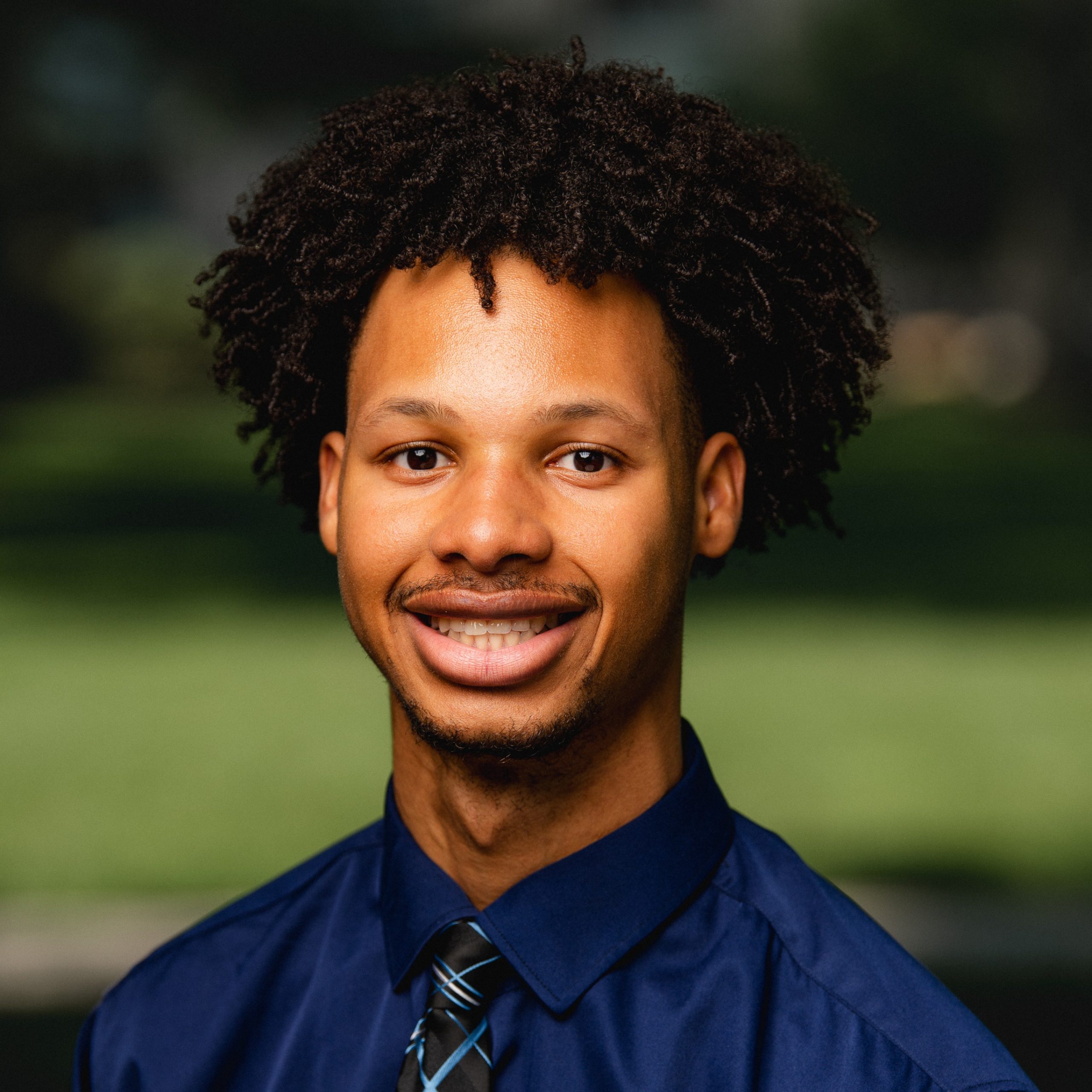
MIT Department: Media, Arts, and Sciences
Faculty Mentor: Prof. Danielle Wood
Undergraduate Institution: North Carolina A&T University
Website:
Biography
Warren Glover II is a senior Cheatham-White Scholar and Honors Mechanical Engineering student with a concentration in Aerospace at North Carolina Agricultural & Technical State University. He became interested in engineering to discover how the intersections of Earth exploration and aerospace technology can be utilized to enhance human life. His current research project involves programming drones to autonomously accomplish tasks related to NASA design challenges. In the summer of 2023, Warren enhanced his organizational skills by assisting in managing an engineering lab at Northrop Grumman. The following summer, he worked with CollinsAerospace Interiors to design a solution that improved the repeatability of certification tests by controlling test dummy positioning. Independent research and cross-functional communication were essential in developing a design that aligned with each sector’s standard practices. His work experiences have deepened his understanding of aerospace policy, strengthened his computer-aided design skills, enhanced his programming capabilities, and broadened his knowledge of the engineering process. Currently, Warren is pursuing career opportunities that allow him to utilize aerospace technologies for environmental protection and Earth science applications.
Abstract
Zero Robotics Analog Experience
Warren Glover II1, Alissa Chavalithumrong2, and Danielle Wood2
1Department of Mechanical Engineering, North Caroline A&T State University
2Department of Aeronautics and Astronautics, Massachusetts Institute of Technology
Zero Robotics is a STEM outreach program designed for middle and high school students to increase their programming skills through robotics coding challenges. Students learn and develop code in a website-based integrated development environment for the NASA Astrobee Robot, which was designed as a scientific testbed to run robotic experiments and operate autonomously to assist astronauts. Due to recent funding restrictions on the ISS and a hold in Astrobee operations, I am developing a ground-based analog experience with a Parrot Bebop 2 drone to provide students with an alternative means of engaging with robot operating systems. I am creating a simulation to model the drone response and tuning a Proportional-Integral-Derivative controller based on motor acceleration for precise movement. The correlation strength between the actual and simulated drone responses will be measured by tracking their positions over time. The simulation will be used to test Python scripts to ensure safety before conducting autonomous flight runs. Drone performance will be evaluated based on its coherence with the motion of space robots and its ability to generate student excitement for programming. Student learning experience will be gauged through pre and post program surveys evaluating student interest, comfort, confidence levels, and skills in computer science and robotics. The project will enhance student learning experiences by demonstrating to the students that they are capable of problem-solving and experimenting with programming and engineering technology, encouraging them to pursue future STEM careers
