

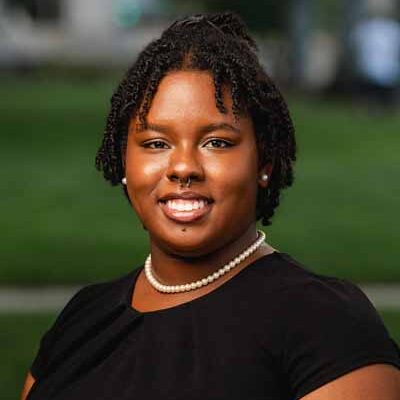
Nia Blunt
MIT Department:
Biological Engineering
Faculty Mentor:
Forest White
Research Supervisor:
Sergio Quispe Sanchez
Undergraduate Institution:
Albany State University
Biography
Nia Blunt is a rising senior at Albany State University, majoring in Forensic Science on the pre-med track. She plans to pursue an MD or MD/PhD and is especially interested in oncology and research that can improve healthcare outcomes in her community. Her research experience includes projects in dermatological science, electrochemistry, and immunology. On campus, Nia serves as Honors Council President, is on the executive board of Women in Pre-Med, and works as a student mentor in the Honors Program. She also volunteers at the food bank and in other campus service activities. Nia enjoys learning new things, entering new research environments, and gaining skills that will help her grow as both a future physician and a researcher. Through medicine and research, she hopes to make a meaningful impact on healthcare, especially in underserved communities.
Uncovering treatment-specific antigens in NRASmut melanoma
Nia Blunt1,2, Sergio Quispe Sanchez2, and Forest White2
1Department of Natural Sciences, Albany State University
2Department of Biological Engineering, Massachusetts Institute of Technology
Melanoma is a type of skin cancer initiated by proliferating melanocytes which are the cells that give the skin its pigmentation. NRAS-mutant melanoma, which is driven by constitutively active MAPK signaling, affects roughly 15-20% of melanoma patients. This subtype is associated with a more aggressive clinical phenotype, including thicker lesions and higher rates of lymph node metastasis, leaving patients at the advanced stage with few treatment options. The standard of care for advanced NRAS-mutant melanoma primarily relies on immune checkpoint inhibitors, which are ineffective in about 50% of cases due to acquired resistance. Recent efforts to profile changes in the antigen repertoire of NRAS-mutant melanoma have identified antigens induced by targeted therapy. However, traditional DDA-based workflows may miss a rich source of lower-abundance or poorly fragmented antigen targets. Combining an untargeted DDA analysis with a targeted PRM workflow will be able to uncover “hidden” treatment-induced antigens. We used standard cell culture techniques, immunoprecipitation to isolate pMHC complexes, a dual mass-spectrometry approach, and R/Python scripts to identify treatment-specific precursors and build an inclusion list for PRM analysis. This work will add a new set of candidate antigens for cancer vaccines and T-cell directed immunotherapies.
