

Mark Blakemore
MIT Department:
Architecture and Planning
Faculty Mentor:
John Ochsendorf
Research Supervisor:
Nebyu Haile
Undergraduate Institution:
Tuskegee University
Biography
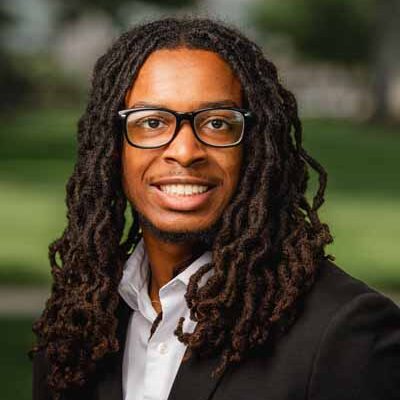
Mark Blakemore, raised in Memphis, Tennessee, is a senior at Tuskegee University pursuing a bachelor’s in architecture. Driven by a commitment to excellence and service, Mark focuses his work on sustainability, innovative design, and urban revitalization. His dedication is highlighted by his participation in the 2025 MIT x Tuskegee Exchange program. Additionally, as an initiate of Kappa Alpha Psi Fraternity, Inc., Mark is dedicated to achievement and service in community action, volunteering for local clean-ups, food drives, and youth empowerment initiatives. Following graduation, Mark intends to practice architecture professionally and earn a master’s degree. He intends to establish an internationally practiced architecture firm paired with real estate. Outside of his professional aspirations, Mark enjoys art, gardening, and investing. He views architecture not as a career, but as a template to revitalize communities, elevate the quality of life, and build an enduring legacy for people and respect the environment.
Reducing Environmental Impact of Brick Production in India
Mark Blakemore Jr.1, Nebyu Haile2, John Ochsendorf2
1Robert R. Taylor School of Architecture and Construction Science, Tuskegee University
2Department of Architecture, Massachusetts Institute of Technology
India is a developing country experiencing rapid urbanization, developing infrastructure, and new construction given the rising population and economic output. Consequently, bricks are being extensively utilized in construction. Unfortunately, brick production has drawbacks with the environment, economic sectors, and health of individuals. Challenges with brick production involves the firing process for brick manufacturing, exhausting non-renewable materials, degrading the environment, and health implications. Brick manufacturing results in high emissions of carbon and pollutants contributing to negative impact to the soil, water, air, and vegetation. Adopting sustainable practices is essential to maintain the environment and have necessary materials for future generations to function with little to no changes in living standards or quality. My research focuses on analyzing the embodied carbon and energy to produce bricks from Fixed Chimney Bull’s Trench kilns in comparison to Vertical Shaft Brick Kilns and Zigzag kilns. Also, I inquired incorporating fly ash, glass and sawdust as alternative materials from waste into brick mix to lower the amount of clay. Current projections imply that VBSK and Zigzag kilns instead of FCBTK output less embodied carbon and energy thus being more environmentally friendly. Also utilizing alternative materials lowers the required energy to make bricks than traditional clay bricks.
