

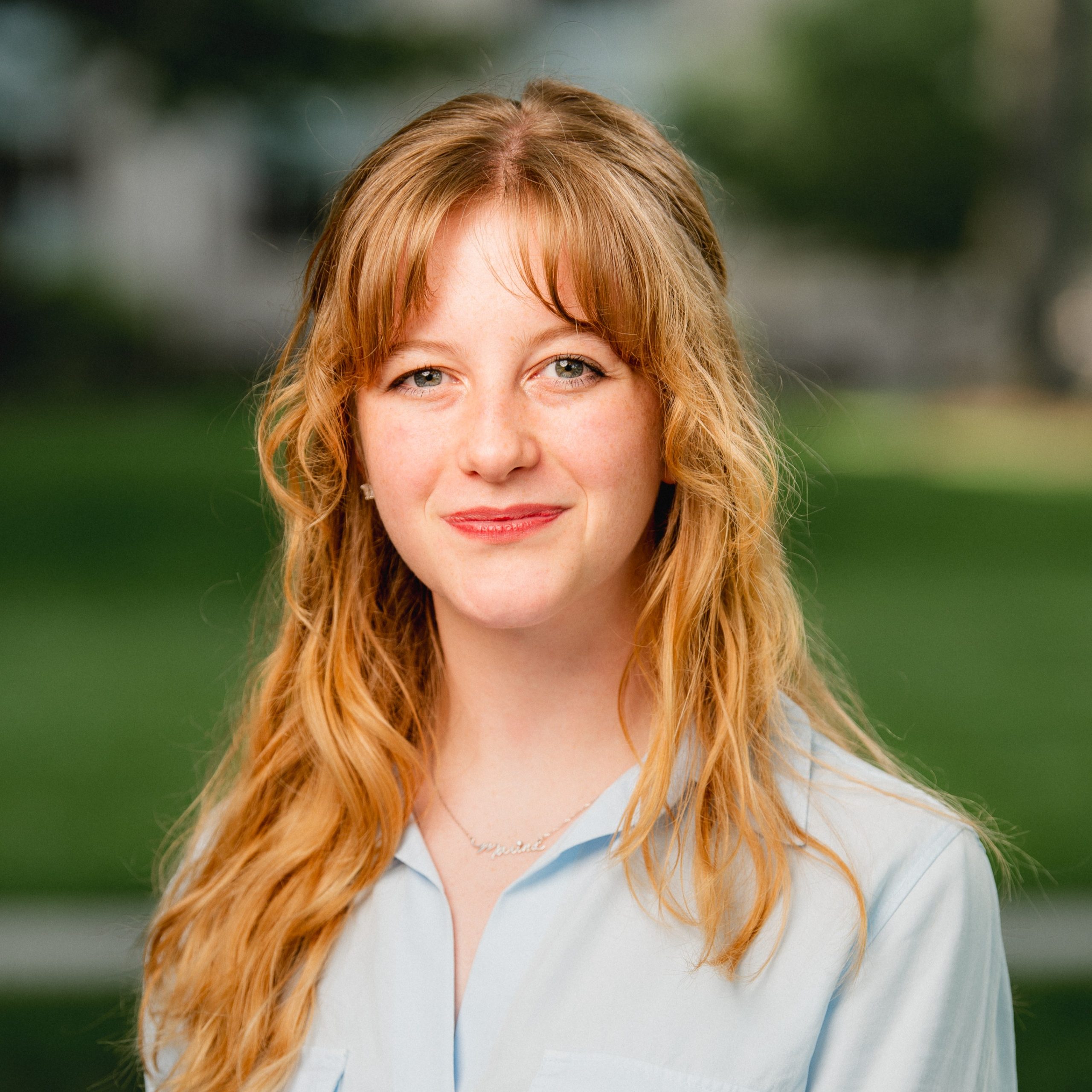
Marina Nichols
MIT Department: Biological Engineering
Faculty Mentor: Prof. Jongyoon Han
Research Supervisor: Do Hyun Park, Evan Qu
Undergraduate Institution: Boston College
Website:
Biography
Marina Nichols is a rising senior at Boston College where she studies applied physics with a biology minor. She chose these subjects because she believes there are biomedical issues best addressed by novel device engineering. That belief has been reinforced by her research experiences.During her REU at Texas Christian University, she fabricated and characterized graphene quantum dot based biosensors. Following, she joined Dr. Kenneth Burch’s lab at Boston College to develop graphene field effect transistors for wastewater analyte detection. This summer, she worked withDr. Jongyoon Han’s group at MIT to design and optimize a microfluidic device to concentrate algae using an inertial spiral and recirculation system. Each of these hands-on experiences has brought Marina new technical skills and developed her research perspective. During graduate school, she will bring her knowledge of biosensors and microfluidics together to develop novel point-of-care diagnostics to help rural communities. Eventually, she hopes to lead efforts that translate these tools into accessible, field-ready technologies—bringing critical diagnostics back to the kinds of small towns where she grew up, and where even small innovations can change lives.
Abstract
Microfluidic Merry-Go-Round: An Inertial Spiral Concentrator for Microalgae
Marina Nichols1, Dohyun Park2, and Jongyoon Han2,3
1Department of Physics, Boston College
2Research Laboratory of Electronics, Massachusetts Institute of Technology
3Department of Biological Engineering, Massachusetts Institute of Technology
Efficient concentration of biological samples is critical in diagnostics, biosensing, and biotechnology. Conventional membrane-based filtration systems often damage cells and require frequent maintenance, limiting their utility in large-scale processes. Inertial spiral microfluidic devices offer a contact-free alternative for focusing micron-sized particles, but prior studies have only achieved marginal increases in concentration. Herein, we engineered a parallel stack of spirals in a recirculating system to achieve a 100-fold concentration of biological material. Within each spiral channel, inertial lift and Dean flow forces focus particles along the inner wall, enabling separation from the bulk fluid. Since throughput scales linearly with the number of stacked spirals, the platform supports the high sample volumes of industry. Using Chlorella spp. microalgae (6 μm diameter) as a model organism, we processed samples at flow rates up to 1500 μL/min for three cycles. The system outperformed existing microfluidic concentrators in both concentration factor and volumetric throughput, without the clogging issues of membrane-based filters. This stacked, recirculating approach provides a robust and scalable method for concentrating dilute biological samples while maintaining cell integrity. The improved performance makes our system an attractive alternative to current concentrators for rapid biosensing and pre-enrichment workflows across clinical, agricultural, and environmental industries.
