

Mariangeliz Delgado López
MIT Department:
Biological Engineering
Faculty Mentor:
Bryan Bryson
Undergraduate Institution:
University of Puerto Rico, Humacao
Biography
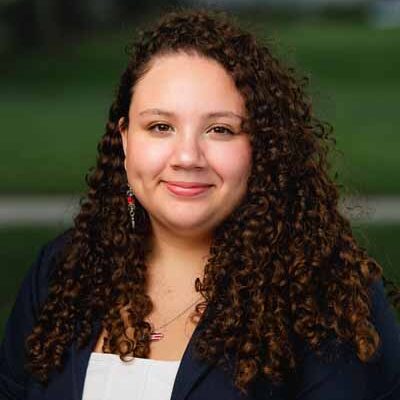
Mariangeliz Delgado López is a rising junior in Microbiology at the University of Puerto Rico at Humacao. Raised in Las Piedras, Puerto Rico, she discovered her passion for research in fifth grade through a project exploring Rhizophora mangle ecosystems. After Hurricane Maria struck Puerto Rico, she expanded this work throughout high school to examine the storm’s effects on these ecosystems, incorporating chemical and microbiological methods under university mentorship. Her current research investigates the antitumoral potential of bioactive compounds in human cancer cell models, reflecting her interests in microbiology, cell biology, and translational medicine. She also develops computational tools that streamline research workflows. Beyond the lab, she has participated in Amgen-sponsored workshops, volunteered with MEDLIFE in Ecuador, and supported biodiversity conservation through Zoocriadero de Mariposas Alianza Verde. Now in her second year with the MIT Summer Research Program, she continues strengthening her confidence as a researcher while preparing for a career as a physician-scientist.
Barcoding Phagosomes in Macrophages and Characterizing Lysosomal
Membrane Damage in THP-1 cells
Mariangeliz Delgado López1 and Bryan Bryson, PhD2
1Department of Biology, University of Puerto Rico, Humacao Campus
2Ragon Institute of Mass General Brigham, Massachusetts Institute of Technology and Harvard
Phagocytosis is a component of the innate immune response in which membrane-bound compartments called phagosomes engulf pathogens, dead cells and foreign material before fusing with lysosomes to form degradative phagolysosomes. Although considerable progress has been made in characterizing phagosome function and lysosomal damage-response pathways, approaches provide limited tools to track phagosome identity and reliably detect lysosomal membrane damage. This gap limits our understanding of phagosome regulation and endomembrane integrity during immune responses. To address these challenges, we are developing complementary approaches for phagosome barcoding in macrophages and lysosomal damage detection in THP-1 cells. A CD68-V5 construct will be engineered and expressed in macrophages by lentiviral transduction to label phagosomal membranes. Immunofluorescence microscopy and phagosome cytometry will visualize and quantitatively analyze labeled phagosomes. In parallel, THP-1 cells will be treated with LLOMe to induce lysosomal membrane permeabilization and stained with a panel of antibodies to evaluate their recruitment to damaged lysosomes by immunofluorescence microscopy. We expect these approaches to establish a robust strategy for tracking phagosomes in macrophages while identifying reliable microscopy markers of lysosomal membrane damage in THP-1 cells. Together, these tools will provide a framework for studies of phagosome regulation, endomembrane homeostasis and immune responses in health and disease.
