

Jiahao Li
MIT Department: Earth, Atmospheric, and Planetary Sciences
Faculty Mentor: Prof. Ryan Woosley
Research Supervisor: Jessica Bruos, Chriss Hill
Undergraduate Institution: Middlebury College
Website:
Biography
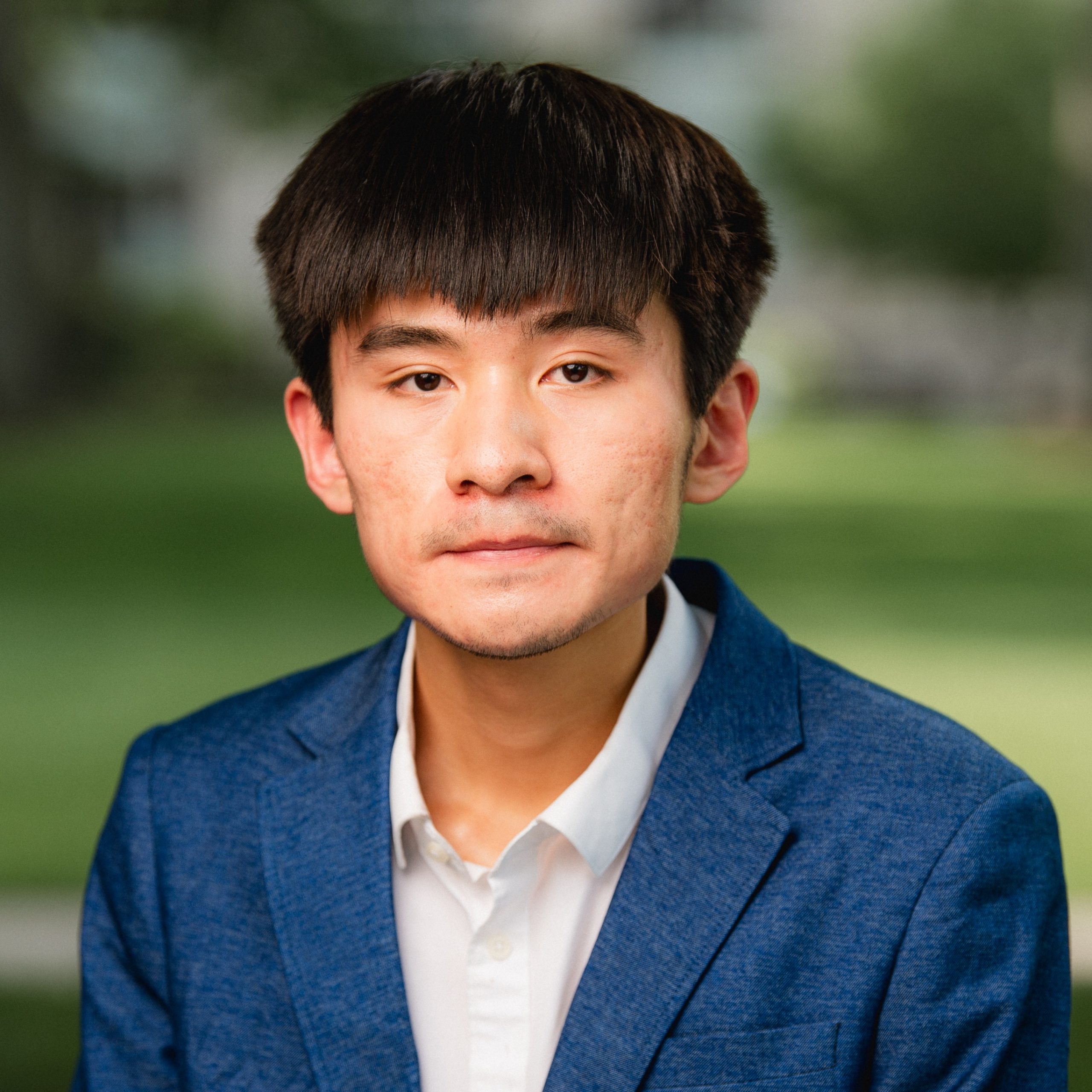
Jiahao Li is a rising senior at the University of California, Irvine, majoring in Earth SystemScience. His academic interests lie in climate dynamics and ocean-atmosphere interactions, including marine heatwaves, ENSO variability, and the global carbon cycle. At UCI, Jiahao conducts research under the guidance of Professor Jin-Yi Yu, examining the patterns and changing characteristics of marine heatwaves in the Gulf of Alaska and the Sea of Japan. At MIT, he working in Dr. Ryan Woosley’s Marine Biogeochemistry Lab, analyzing seawater samples from the Cape Cod Bay area to investigate the inorganic carbon cycle using both laboratory techniques and data-driven approaches. He is developing traditional linear regression models as well as machine learning tools to better understand the biogeochemical dynamics of coastal environments. Jiahao is determined to contribute to the scientific understanding of ocean-climate systems through research and future graduate study. Outside of academics, he is passionate about classical piano and hiking.
Abstract
Quantifying Anthropogenic CO2, Influence on the Inorganic Carbon Cycle in Cape Cod Bay via Multi-Linear Regression and Machine Learning Models
Jiahao Li1, Christopher N. Hill2, and Ryan Woosley2
1Department of Earth System Science, University of California, Irvine
2Department of Earth, Atmospheric and Planetary Sciences, Massachusetts Institute of Technology
Coastal acidification, a regional expression of ocean acidification, is still poorly constrained compared to open-ocean systems—particularly in semi-enclosed environments like Cape Cod Bay(CCB). As anthropogenic CO2 emissions continue to rise, understanding localized variability in carbonate chemistry becomes essential. Cape Cod Bay exhibits significantly more variable carbonate parameters—such as pHt insitu, total alkalinity (TA), and dissolved inorganic carbon (DIC) than the adjacent Gulf of Maine, largely due to freshwater inputs, submarine groundwater discharge (SGD), and enhanced biological and anthropogenic influences. In this study, we develop predictive models for carbonate parameters (TA, DIC, and pH@20°C) using multilinear regression and machine learning methods trained on in-situ monitoring data. These estimates are used with CO2SYS to predict pHt achieving high accuracy (mean residual < 0.0001; standard deviation < 0.1). The whole maps of calcite and aragonite saturation states for the entire CCB are plotted by local interpolation of the bay area using the carbonate parameters predicted. Our findings show that Cape Cod Bay’s inorganic carbon cycle is shaped by the interplay of seasonal air-sea CO2 exchange, terrestrial inputs, and water mass retention, making it an acidification hotspot distinct from the Gulf of Maine. Predictive models trained locally on Cape Cod Bay data outperform ESPER’s regional interpolations, emphasizing the value of site-specific approaches. This study provides new insights into coastal carbon dynamics and offers a scalable framework for carbonate forecasting in other nearshore systems.
