

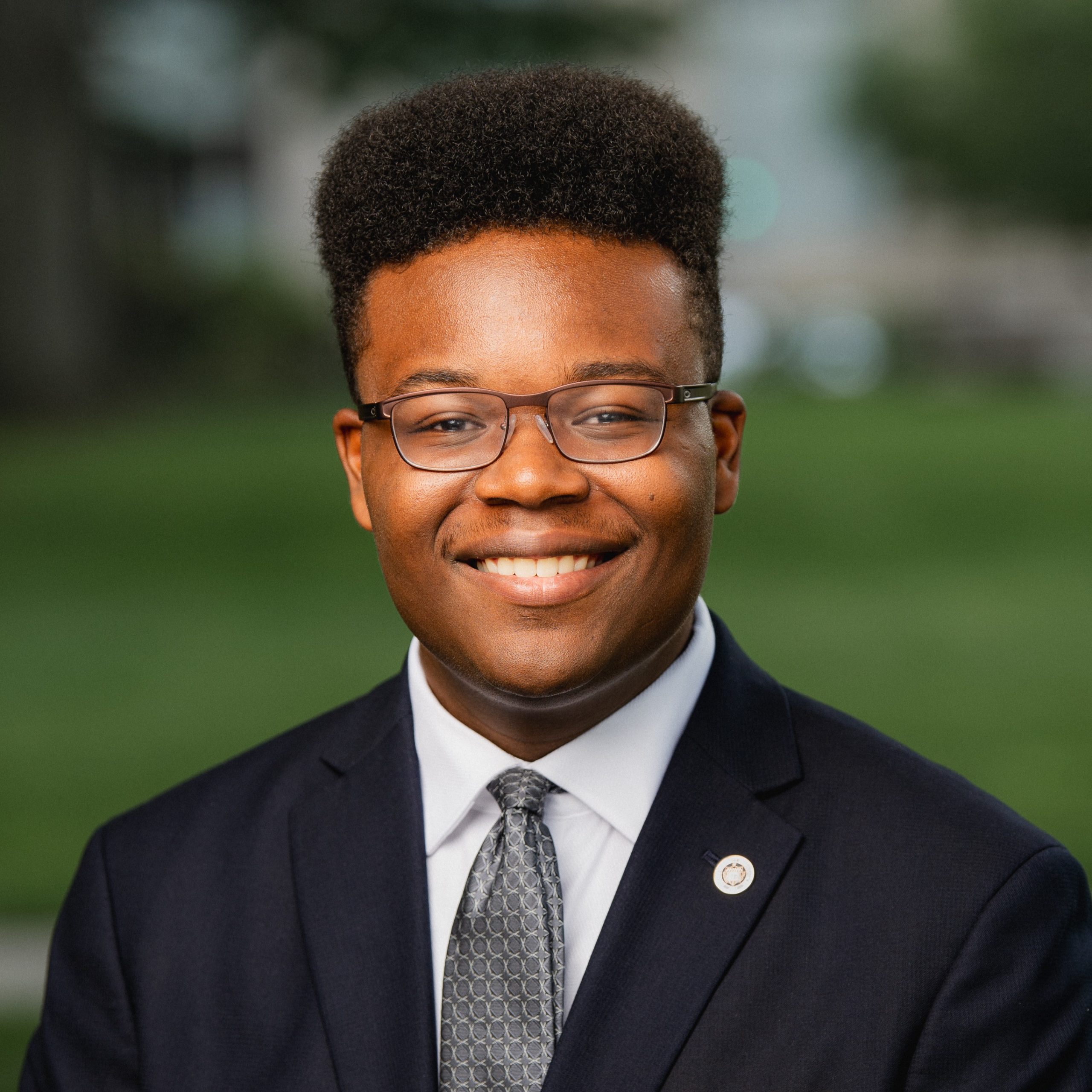
Garrison Andrews
MIT Department: Political Science
Faculty Mentor: Prof. Ariel White
Research Supervisor: Jared Kalow
Undergraduate Institution: Howard University
Website:
Biography
Garrison Andrews is an intellectually curious and globally conscientious second-year student majoring in political science and history at Howard University from Stone MountainGeorgia. He is committed to fulfilling a sense of purpose which is to develop and dedicate himself as a leader and servant of the public. He is a member of the second cohort of the HowardUniversity Humanities and Social Sciences Scholars Program, and his research interests center around exploring how U.S. Humanitarian Assistance in West Africa can be further leveraged within U.S. Foreign Policy to promote regional stability and growth. He is aYouth Staff Member at the Partnership for Southern Equity and a recipient of the Atlanta Journal-Constitution Cup as well as the Daughters of the American Revolution Good Citizen Award. He is dedicated to fostering positive change through cultivating a global sense of community.
Abstract
U.S. Foreign Assistance and Militancy a Layered Analysis on U.S. Foreign Assistance in West Africa and its impact on the Militancy in the Region
Garrison Andrews1, and Ariel White2
1Department of Political Science and History, Howard University
2Department of Political Science, Massachusetts Institute of Technology
Does U.S. Foreign Assistance reduce state and non-state involved militant violence? As of 2025, United States Foreign Assistance is seeing major readjustment under the Trump Administration, such as the downscaling of the United States Agency for International Development (USAID). It is therefore pertinent to understand its record of layered impacts within various forms including humanitarian and development assistance. Within this particularly polarizing political landscape, I pose the question of whether the expansion of U.S. Development and Humanitarian Assistance has the layered impact of reducing state-involved and organized non-state-involved violence in West Africa. My approach seeks to answer this question through the analysis of existing data on reported violence-related deaths from the (UCDP, n.d.) and United States Foreign Assistance data from (ForeignAssistance.gov). Through the use of regression-based modeling and temporal trend analysis employing data collected from different West African nations with varying levels of state and non-state involved violence ranging from 2001 to 2023, it is my finding that neither United States Development nor Humanitarian Assistance significantly reduces state-involved or organized non-state involved violence. These findings indicate that there may need to be a furthering of U.S. Development Assistance in proactively getting ahead of challenges like militancy.
