

Denis Sibrian Gonzalez
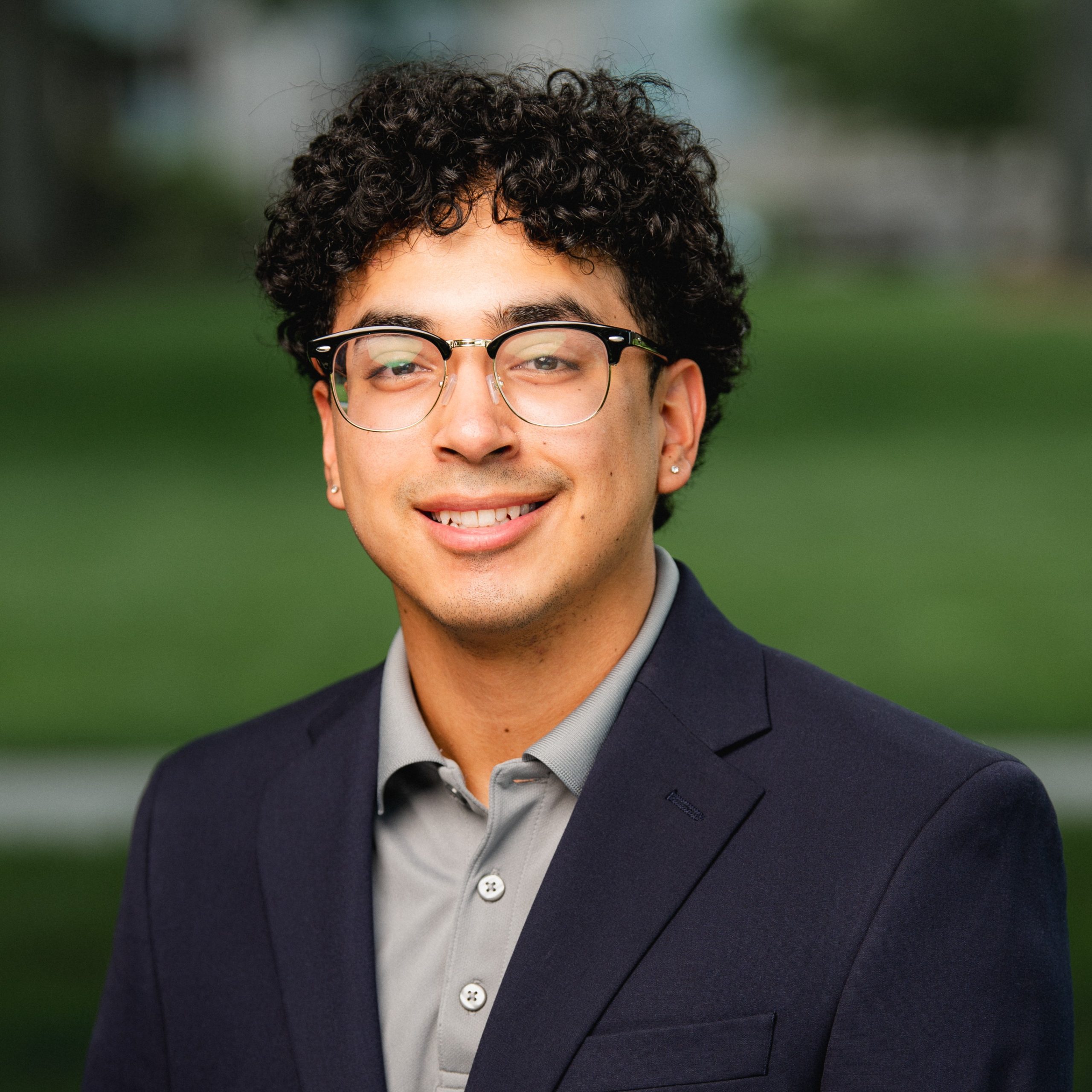
MIT Department: Chemistry
Faculty Mentor: Prof. Alex Shalek
Research Supervisor: Benoit Desboilles
Undergraduate Institution: North Carolina Central University
Website:
Biography
Denis Sibrian Gonzalez is a first-generation college student from El Salvador and a rising senior atNorth Carolina Central University, majoring in Chemistry with interests at the intersection of chemistry, biology, and medicine. His research began in natural products chemistry, working with Dr. Omar Christian to isolate novel bioactive metabolites targeting infectious and cardiovascular diseases. He later broadened his experience through the SROP at Michigan State University, developing sustainable bio-based polymers.Currently, he is conducting research in Dr. Alex Shalek’s lab at MIT through the MSRP program, studying how gene expression in pediatric brain tumors relates to neural activity and disease progression. These experiences have inspired him to pursue graduate study focused on understanding disease and developing more effective therapies. Beyond research, he is committed to teaching and mentorship, having served as aSupplemental Instructor and led a study evaluating his tutoring program. He also enjoys hiking, especially exploring volcanoes that connect him to his roots in El Salvador.
Abstract
Design, Characterization and Validation of Multielectrode Arrays for Combined Spatial Transcriptomics and Electrophysiological Recordings
Denis Sibrian Gonzalez1, Benoit Desbiolles2, Yunhao Bai3, Fei Chen3, Charles Couturier4, and Alex Shalek2
1Department of Chemistry and BioChemistry, North Carolina Central University
2Institute of Medical Engineering and Science, Massachusetts Institute of Technology
3Broad Institute of MIT and Harvard
4Department of Neurology and Neurosurgery, McGill University
Pediatric brain tumors often cause drug-resistant seizures, severely impacting children’s development and quality of life. Our understanding of seizure mechanisms remains limited, in part because current methods cannot simultaneously measure gene expression and electrical activity in intact tumor tissue. This project addresses that gap by developing and testing a novel micro-electrode array integrated with a spatial transcriptomics platform.
My objective within this broader project was to design, optimize, and validate the multi-electrode arrays for high-resolution mapping of extracellular field potentials in acute brain slices. I developed an
analytical model of the cell and electrode interface to predict signal attenuation and guide micro-electrode design. To support data acquisition, I built an interface using a printed circuit board and three-dimensional printed base to connect the array to standard amplifiers. I characterized electrode performance using electrochemical impedance spectroscopy, measuring double layer capacitance and charge transfer resistance, which aligned with model predictions. I also tested the effect of black platinum coatings, which lowered impedance and improved signal quality. Finally, I performed extracellular recordings in acute rodent brain slices, confirming the array’s ability to capture neural signals. Combined with spatial transcriptomics, this platform enables molecular and functional profiling of tumor tissue to uncover seizure mechanisms
