

Darren Stevens
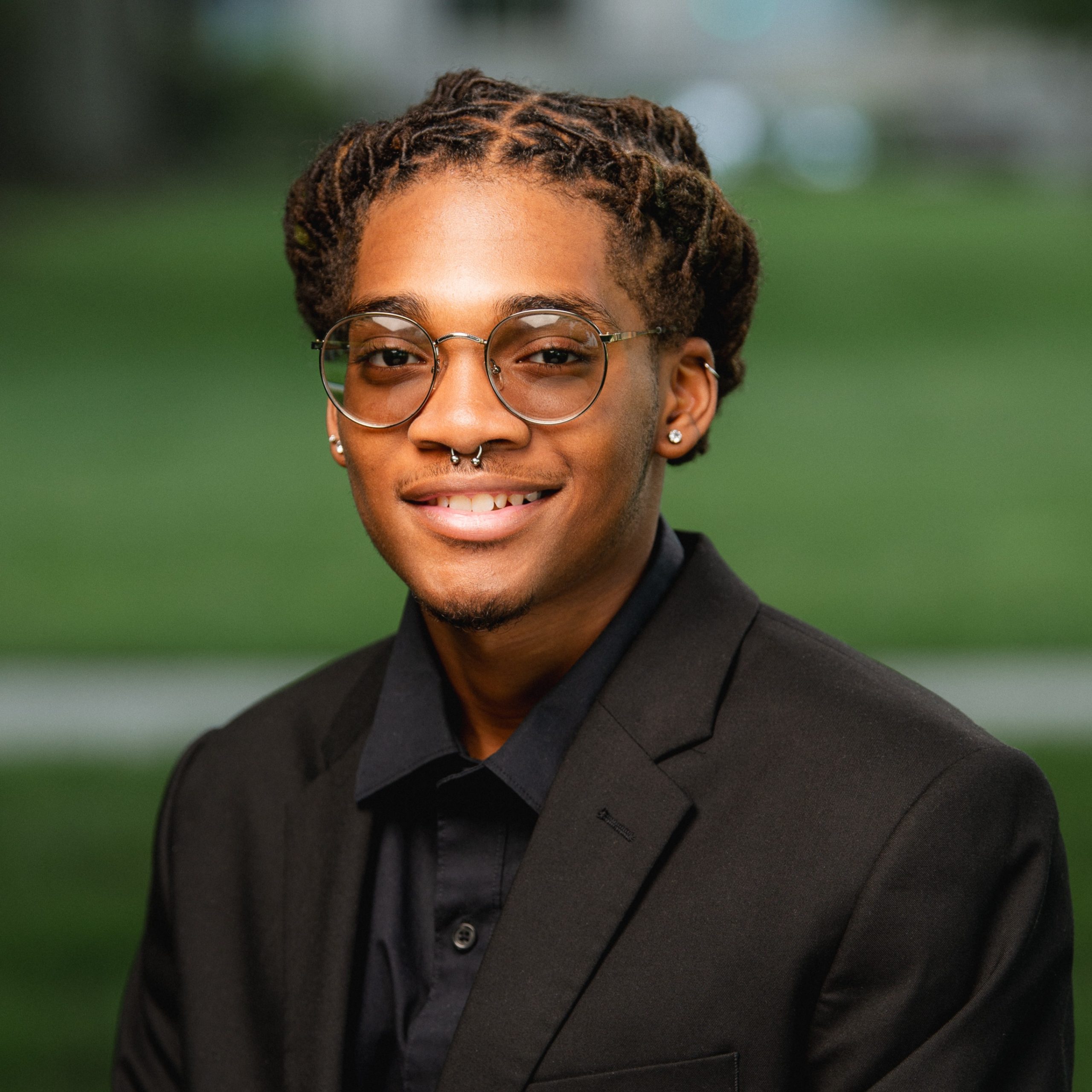
MIT Department: Chemical Engineering
Faculty Mentor: Prof. Ariel Furst
Research Supervisor: Grace Anderson
Undergraduate Institution: Tougaloo College
Website:
Biography
Originally from Illinois, Darren Stevens is a rising sophomore at Tougaloo College, where he received a full-ride scholarship. He has a multitude of interests including principles of chemistry, public health, and education. Currently, he is focusing on chemistry to eventually attend graduate school to pursue a PhD in chemical engineering.Apart from his studies, he is active in multiple clubs on campus, including an ambassador program for his school. He believes in supporting upcoming students to allow them to succeed early. During Summer 2025, he gained research experience working in the Furst lab. This experience has only made him more excited to continue his education and piqued his interest in research
Abstract
Metal Phenolic Network Protection Against Environmental Stressors
Darren Stevens1, Grace Anderson2, and Ariel Furst2
1Department of Chemistry, Tougaloo College
2Department of Chemical Engineering, Massachusetts Institute of Technology
Microbes are an essential part of the environment, whether it be in the soil we grow our food in or in one’s gut. However, the main problem with this is that microbe viability can be affected by environmental stressors. The Furst Lab at MIT has proposed that microbes can be used in the environment to repair nitrogen-degraded soil and restore balance to the gut. The main purpose of this MIT summer research project has been to validate that oxidative stress can be measured accurately in microbes. The other part of the project has been to identify if metal-phenolic networks can improve microbe viability even when faced with these environmental stressors. With an understanding of how to induce oxidative stress, we successfully detected a statistically significant amount of oxidative stress with fluorescent dyes. With this new understanding, we should be able to use fluorescent dyes to measure oxidative stress differences between uncoated and coated microbes. The hope moving forward is to test metal-phenolic networks coated microbes against uncoated microbes to confirm that metal-phenolic networks will increase viability.
