

Alanna Boller
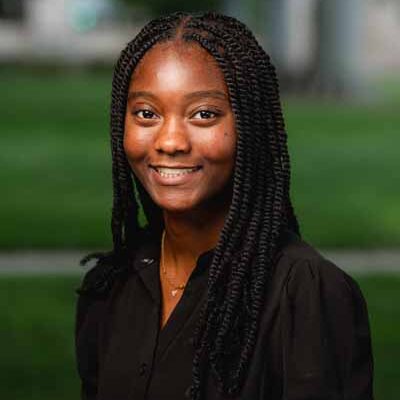
MIT Department:
Physics
Faculty Mentor:
Matthew Vander Heiden
Research Supervisor:
Patrick Cunniff
Undergraduate Institution:
Georgia State University
Biography
Alanna Boller is a rising sophomore at the Georgia Institute of Technology, majoring in Chemical and Biomolecular Engineering. As an aspiring researcher, she hopes to contribute to breakthroughs made in human and translational research or plant bioengineering research. Alanna wants to help ensure that all newfound information, technology, and medicine is accessible to all. Her research would be done to help everyone in the world despite economic or geographical limitations. She is planning on attaining her Ph.D. in Bioengineering and working in academia. This summer, Alanna worked in the Koch Institute for Integrative Cancer Research under Dr. Patrick Cunniff in the Vander Heiden Lab. Her project focused on understanding the level of cancer-relevant replication stress-induced gene expression changes in Caco2 and LS180 cell lines by analyzing changes when exposed to chronic and acute doses of hydroxyurea. Beyond research, Alanna enjoys reading, eating new foods, and being outdoors.
Replication Stress Induced Gene-Expression Changes in Cancer-Relevant
Cell Lines
Alanna Boller1, Patrick Cunniff2, Matthew Vander Heiden2
1Department of Chemical and Biomolecular Engineering, Georgia Institute of Technology
2Koch Institute for Integrative Cancer Research, Massachusetts Institute of Technology
Cells require an adequate amount of nucleotides in their environment in order to proliferate. Previous studies have revealed that depleting a cell of nucleotides induces a state of replication stress, which can cause a cell to activate silent genes. Cancer cells are susceptible to replication stress because of inherent limiting microenvironmental factors and mutations in their genes. Replication stress may endow cancer cells the ability to change their gene expression and trajectory to promote metastasis and proliferation. However, the frequency of tumorigenic cells responding to replication stress is unclear. By inducing acute or chronic replication stress, my project aims to assess whether intensity or duration of replication stress is more critical for gene expression changes. I use hydroxyurea, which inhibits deoxynucleotides, to induce replication stress in two colorectal cancer cell lines. I then identify proteins that indicate gene expression changes, including secretarial lineage proteins. I compare activation of silent genes by observing the different levels of RNA and protein expression under acute and chronic replication stress. I also establish CRISPR knock-in cells in order to quantify replication-stress induced gene-expression changes. Cancer cells that have activated silent genes can accumulate secretory features that enable them to create their own metastatic niche.
