

Denise Erkok
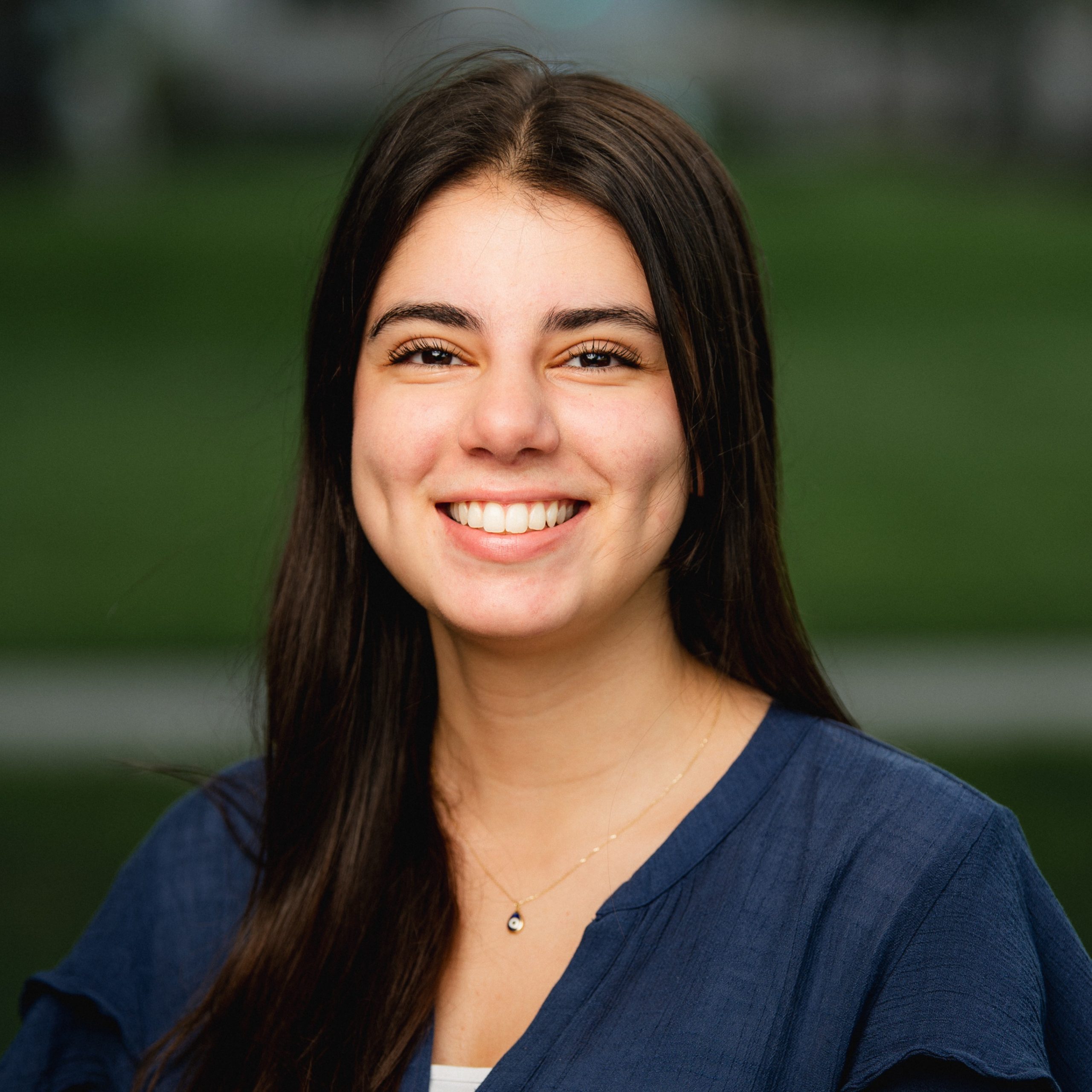
MIT Department: Biological Engineering
Faculty Mentor: Prof. Anders Hansen
Research Supervisor: Masahiro Nagano
Undergraduate Institution: University of California, San Diego
Website:
Biography
Deniz is a rising senior at the University of California, San Diego, majoring in Molecular and Cell Biology. She conducts synthetic biology research in Dr. Jeff Hasty’s lab, where she focuses on remodeling the tumor microenvironment through host-microbe interactions. In addition to her research, Deniz is passionate about teaching and has served as an undergraduate assistant in the chemistry department. This summer at MIT, Deniz is working to improve gene enhancer location and activity predictions using the CRISPR system and other quantification techniques. She hopes to apply her research experience and interdisciplinary coursework background to help uncover the molecular basis of disease and cancer in a PhD program.Outside of academics, she enjoys hiking, exploring the local food scene, and reading fantasy and science fiction.
Abstract
Towards a Quantitative Understanding of Enhancer-Mediated Gene Regulation
Denise Erkok1, Masahiro Nagano2,3,4,5, Wei-Lin Qui5,6, Robin Andersson5,6, Anders Sejr Hansen2,3,4,5
1Department of Biological Sciences, University of California, San Diego
2Department of Bioengineering, Massachusetts Institute of Technology
3The Broad Institute of MIT and Harvard
4Koch Institute for Integrative Cancer Research
5The Novo Nordisk Foundation Center for Genomic Mechanisms of Disease, Broad Institute ofMIT and Harvard
6Section for Computational and RNA Biology, Department of Biology, University of Copenhagen
Enhancers are primary regulatory units of gene expression in mammals, yet the precise mechanisms—especially the quantitative impact of individual enhancers—remain largely unresolved. To address this, this work leveraged the scE2G model to map putative enhancer dynamics throughout in vitro germ cell differentiation. By further incorporating ultra-deep Micro-C, which enables high-resolution profiling of chromatin spatial proximity, we developed a framework for quantitatively predicting enhancer activity. To test this model, I performed CRISPR-Cas9–mediated deletions of enhancers associated with four different genes. I will assess gene expression changes via RT-qPCR and analyze the results to both score the mode land evaluate the impact of the deletions. The results of this research promise progress in understanding enhancer-mediated gene regulation
