

Barak Meachem
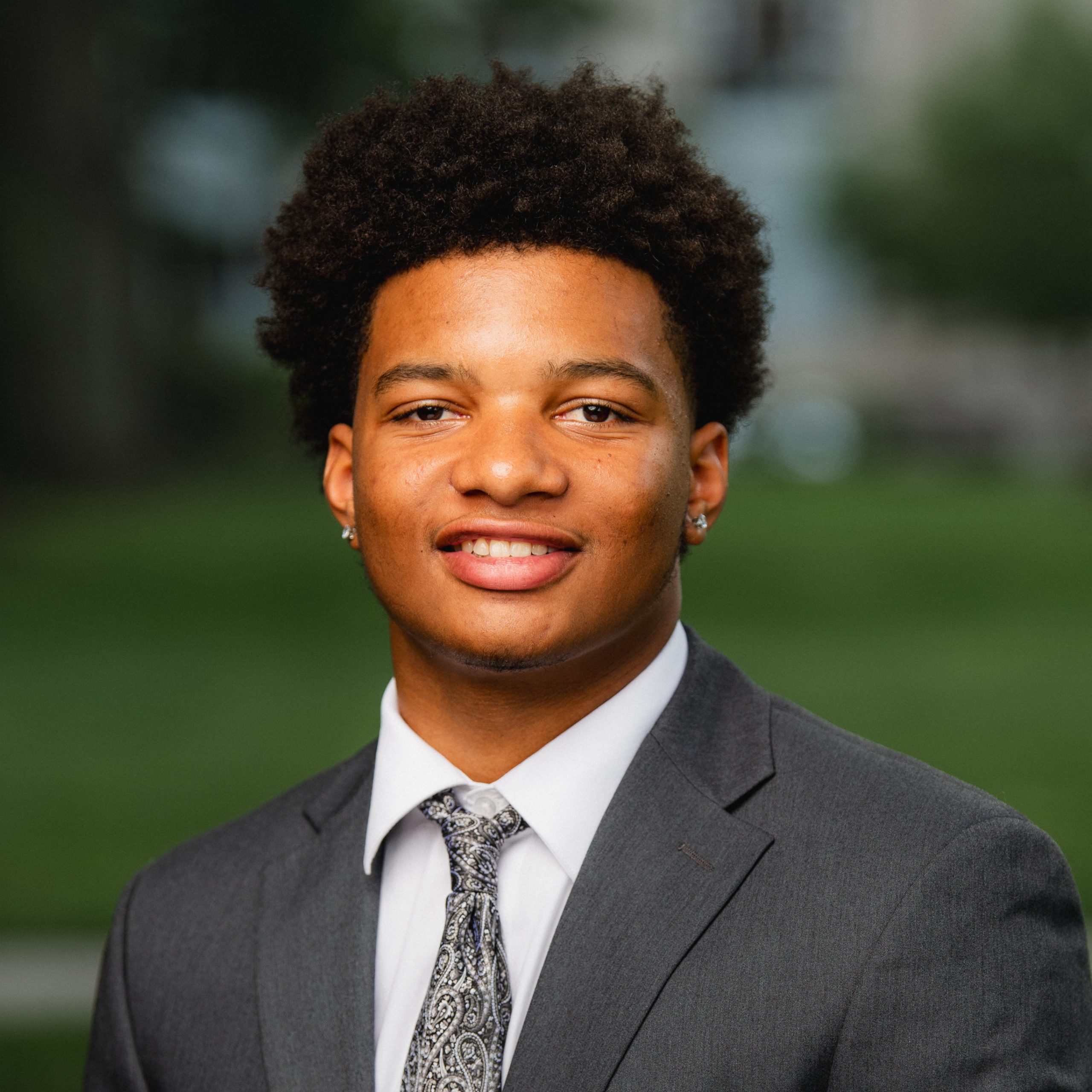
MIT Department: Biology
Faculty Mentor: Prof. Richard Young
Research Supervisor: Giuseppi Dall’Agnese, Alexandra Ramos
Undergraduate Institution: North Carolina Central University
Website:
Biography
Barak Meachem is a rising junior at North Carolina Central University pursuing a double major in Biomedical Sciences and Business Administration. He is a Cheatham-White Scholarwith a passion for medicine, research, and addressing health disparities.At Duke Univeristy, he conducted research on RNA polymerase II pausing in disease. He also worked at East CarolinaUniversity’s Brody School of Medicine on receptor cross-talk in cardiac remodeling and the effects of environmental toxins on kidney function. He is the founder of the Taylor-Meachem Foundation, a nonprofit focused on youth empowerment and community service. On campus, he serves as Vice President of TriBeta and Community Service Chair for MAPS. Meachemen joys mentoring, giving back to his community, and using science to create change. In his free time, Meachem loves playing sports like basketball, football, and pickleball, and recently picked up cooking as a hobby. He plans to become an anesthesiologist and start his own medical practice or research lab someday.
Abstract
Investigating ROS-Induced Protelethargy in HepG2 Cells: Effects of Bleomycin on Protein Mobility and Oxidative Stress
Barak Meachem1, Giuseppi Dall’Agnese2
1Department of Biology, North Carolina Central Unversity
2Department of Biology, Whitehead Institute for Biomedical Research, Massachusetts Institute of Technology
Reactive oxygen species (ROS) are critical regulators of cell signaling but become pathogenic when produced in excess, leading to oxidative stress. One emerging consequence of chronic oxidative stress is reduced protein mobility, termed protelethargy, which may impair essential cellular functions. This study investigates the effects of bleomycin—a ROS-inducing chemotherapeutic—on protein mobility in HepG2 liver cancer cells and explores antioxidant rescue using N-acetylcysteine (NAC). HepG2 cells were treated with a gradient of bleomycin concentrations (0.1–20 μM) for 24 hours, and intracellular ROS levels were quantified using CellROX Deep Red staining. Protein mobility was assessed using Fluorescence Recovery After Photobleaching (FRAP), both with and without NAC pretreatment. Preliminary findings from insulin-induced oxidative stress previously showed protelethargy in HepG2 cells. We hypothesize that bleomycin will similarly impair protein mobility in a dose-dependent manner and that NAC will restore protein dynamics. This study seeks to establish a causal link between ROS and protelethargy, offering insights into redox-sensitive regulation of intracellular processes and informing therapeutic strategies targeting oxidative damage in disease.
