

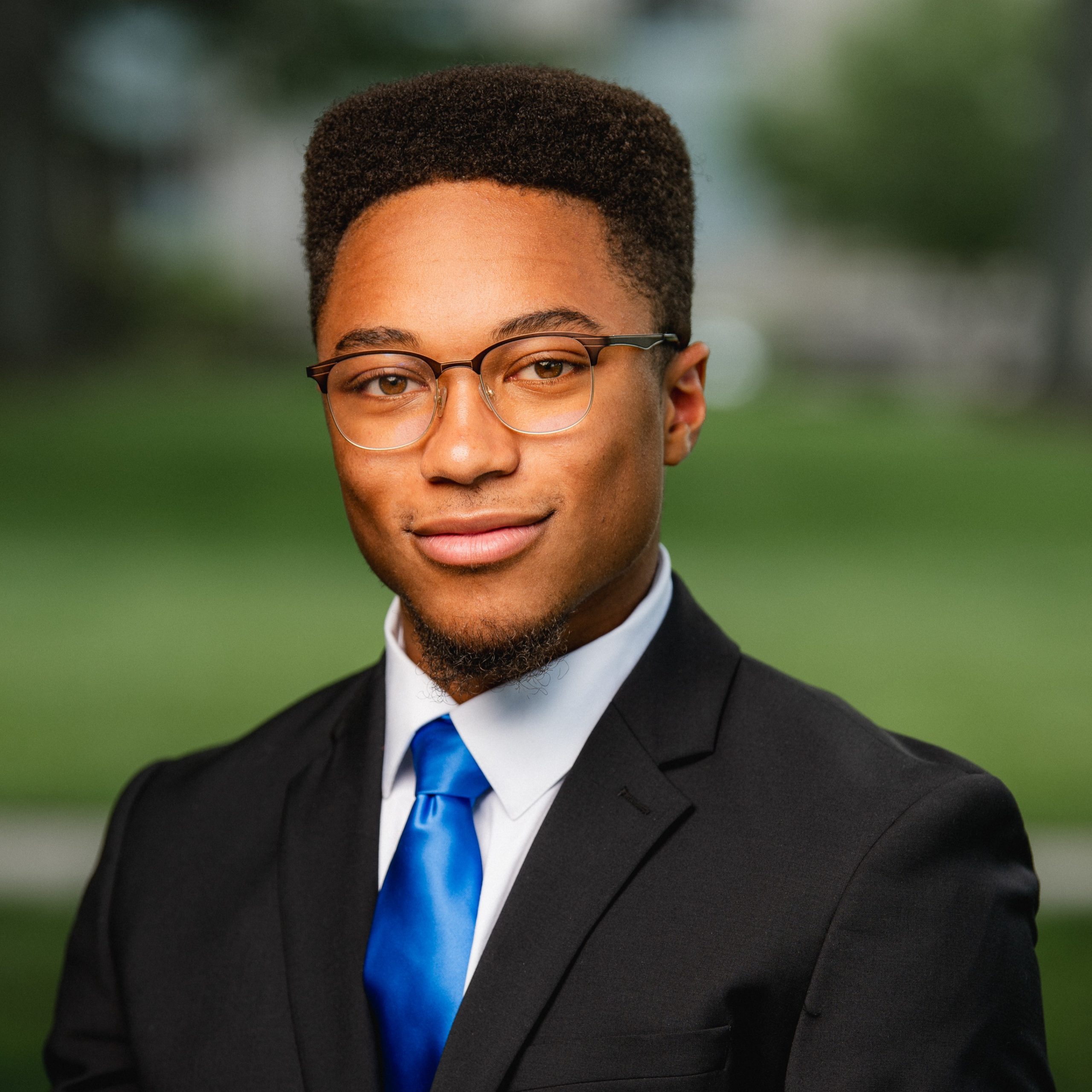
Vincent Grady
MIT Department: Aeronautics and Astronautics
Faculty Mentor: Prof. Chuchu Fan
Research Supervisor: Anjali Parasher, Yingke Li
Undergraduate Institution: North Carolina A&T State University
Website:
Biography
Vincent Grady is an aspiring Electrical Engineer from North Carolina A&T with dreams of developing technology to create permanent settlements in space. Vincent is from Fayetteville,North Carolina, and has lived there almost his entire life until going to the wonderful North Carolina A&T State University in Greensboro, NC, to pursue a degree in electrical engineering. Vincent’s passion for engineering and space originates from a childhood filled with science fiction material and various creative outlets. During his time at NC A&T, he has held internships in the aerospace industry with organizations such as GE Aerospace, Collins Aerospace, Boeing, and NASA. He has also spent time sharpening his prototyping skills on projects like the IEEESoutheast Con Hardware Competition and the NASA Student Launch Competition. Vincent’s past and drive have provided him with priceless problem-solving and leadership skills to facilitate success anywhere he ends up.
Abstract
Multi-Agent Fire Suppression Benchmarking Simulation
Vincent Grady1, Anjali Parashar2, Yingke Li2, and Chuchi Fan2
1Department of Electrical Engineering, North Carolina A&T State University
2Department of Aeronautics and Astronautics, Massachusetts Institute of Technology
As autonomous systems improve and become more widely used globally, it is increasingly important to implement improved ethical decision-making methods. Addressing the important issue of testing and optimizing ethical decision-making algorithms for autonomous systems has led the Reliable Autonomous Systems Lab at MIT (REALM) to develop a simulation tool for a multi-agent fire suppression scenario with drones using chemical and water-based retardants. This scenario requires simultaneous minimization of fire damage and chemical retardant damage. This project uses the WebotsTM software simulator to control and monitor drones in a simulated environment, along with a Python simulation for fire spread and extinguishment. The simulation supports high customization of inputs and observables. It is designed for easy and simple injection of control parameters and retrieval of belief states and ground truth. A grid-based fire simulation is used to get information on damage. The observables can be used to evaluate ethics and fine tune multi-agent policy. The simulation has been tested to be compatible with the lab’s developing ethical optimization pipeline. Future work will involve fine tuning of the simulation and the ethical optimization pipeline. The end result should serve to improve the ethical decision making of autonomous systems around the world.
