

David Flores
MIT Department: Chemical Engineering
Faculty Mentor: Prof. Heather Kulik
Research Supervisor: Aaron Garrison, Jacob Toney, Beck Miller
Undergraduate Institution: Pennsylvania State University
Website:
Biography
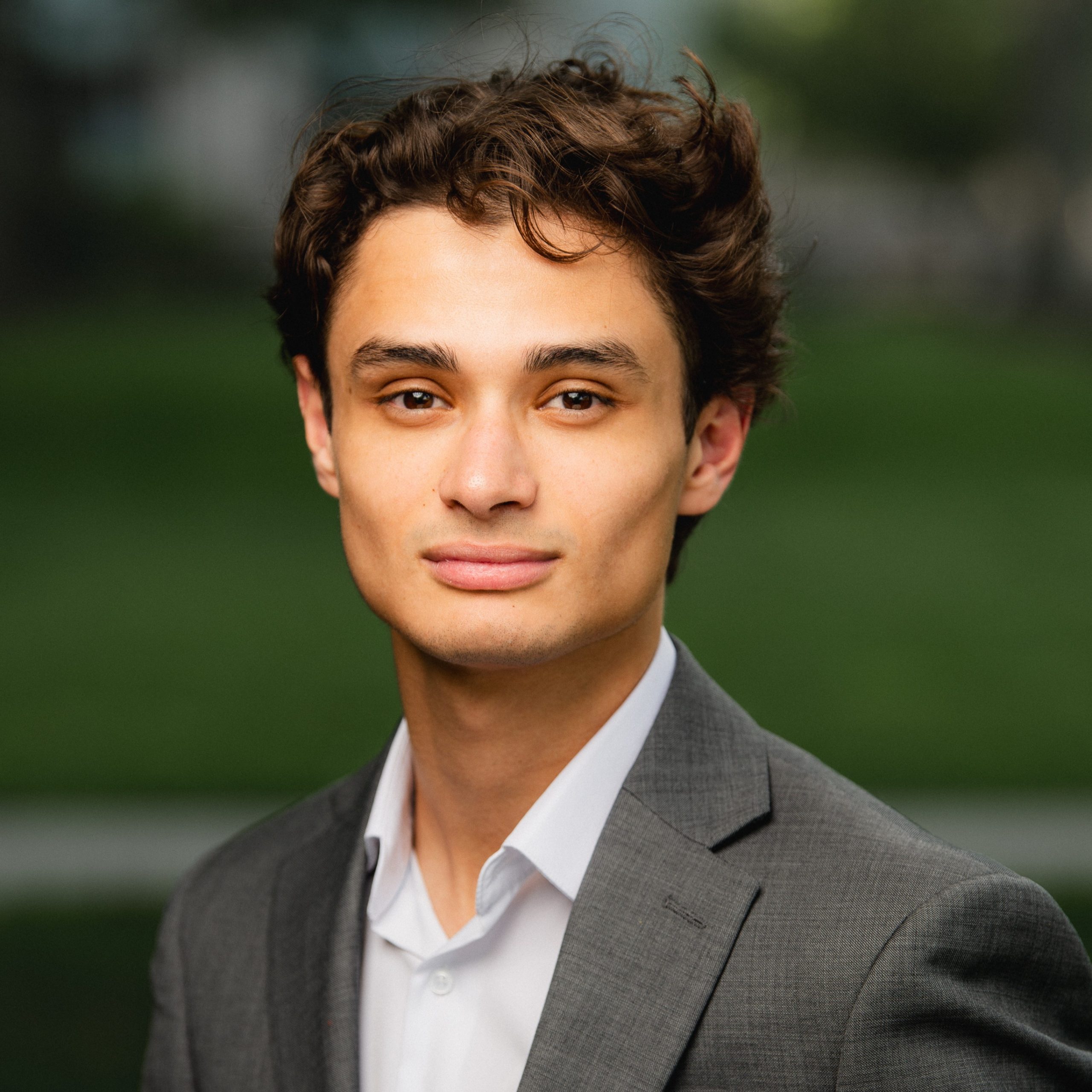
David Flores is a rising fourth-year Millennium Scholar at Penn State University, studying Materials Science and Engineering. As a proud Honduran national and Canadian citizen, David’s lived experiences have motivated him to bridge cutting-edge materials discoveries with global market implementation. David ultimately aims to address this by launching a startup focused on the computational discovery of new, but also commercially viable materials. His current research focuses on the responsible use of machine learning tools for materials science, focusing on transition metal complexes (MIT) and high entropy alloys(Penn State). His previous experience also includes simulations of sustainable battery materials(Northwestern University) and work in nanophotonics for sensing applications (VanderbiltUniversity), having won awards for oral and poster presentations. David has also served as theSecretary and Social Director for Penn State SHPE, and is excited to contribute to the PennState Humanitarian Engineering and Social Entrepreneurship Program this fall.
Abstract
Bridging Computation and Chemical Intuition: Analyzing the Differences in Chemical Simulation Methods for Transition Metal Complexes
David Flores1, Aaron G. Garrison2, Heather J. Kulik2,3
1Department of Materials Science and Engineering, Penn State University
2Department of Chemical Engineering, Massachusetts Institute of Technology
3Department of Chemistry, Massachusetts Institute of Technology
Transition metal complexes (TMCs) are promising materials for catalysis and medicinal applications due to their highly tunable chemistry. Computational tools accelerate TMC discovery by simulating the properties of many candidate structures to recommend for experimental testing – a process that depends on the choice of a density functional approximation (DFA). However, different DFAs introduce method-specific biases that can produce conflicting results for the same TMC, limiting their reliability and transferability. This work uses machine learning (ML) to identify TMCs where DFA predictions diverge and build chemical intuition behind these discrepancies. We train gradient boosting models on 5,930 TMCs simulated with 10 different DFAs, using features derived from molecular graphs and chemical descriptors. The models predict both single-DFA results and deviations between DFAs, targeting the energy gap between filled and empty orbitals. We apply the models to an unseen test set of 7,170 TMCs and use ML explainability techniques (SHAP) to identify the chemical characteristics driving DFA disagreements across diverse chemical spaces. These insights are leveraged to design TMC structures with high DFA disagreement. More broadly, this work supports the development of more reliable and generalizable simulation methods, and enables computational materials discovery grounded in deeper chemical understanding.
